From Tennis Courts to Christian Formation: Curiosity and Confidence Lead the Way
While living away from home for an interim period, I am trying to keep my humble tennis game afloat. Sampling community clinics exposes different leadership styles. Thank goodness for Daneric Hazelman. He is a tennis pro who knows how to lead the perfect 90 minute clinic, gracefully accommodating a wide level of skill, age and ability. Daneric creates a stimulating workout no matter the weather or participants. I am learning tennis, but I am also gaining new insight into my work in the church. Daneric relies on a powerful mix of curiosity and confidence, and I believe this applies directly to leadership in formation.
Daneric’s practice of combining curiosity and confidence is extremely effective and often forgotten in the challenges of church leadership. “How did you like that drill?” he continually asks. Daneric values input by inquiring of our experience of the drills he has carefully planned and executed. Do formation leaders maintain enough curiosity towards what is truly happening in the faith community in order to respond effectively? Daneric is a high level tennis player with confidence in his own ability, yet he is able to translate tennis to lower level players in a very gracious manner. Do formation leaders remember how it feels to be new to church, new to faith? Do they have confidence in their own spiritual grounding enough to lead a variety of ages and stages? A leadership approach based in curiosity and confidence creates vitality, energy, and enthusiasm. In church this means the Holy Spirit is present and at work.
Curiosity: My favorite question for folks who show up for worship is, “Why are you here?” In today’s world, church attendance is optional. I am continuously curious about what draws people of all ages to a particular faith community. Ministry leaders should explore this question on a regular basis, but do we really want to know what people in our congregations are thinking? When I was newly ordained, one of my mentors taught me the downside of surveys. “People are not honest with themselves or with you,” he insisted. “For example, they always say they want more Bible Study, but they never bother to attend when you offer it.” My mentor may sound cynical, but I recognize his wisdom from a lifetime of work in the church. How often do we diligently plan and produce rich opportunities for growing in faith, and yet the number of participants remains small? I prefer the way Barbara Brown Taylor frames this issue. She writes that when people express an interest in studying Scripture, they are actually looking for an encounter with the Divine. This generous perspective honors the desire that brought someone to church in the first place. It’s always wise to filter feedback— we don’t want to waste valuable energy. But a continual practice of curiosity keeps us listening and open to the work of the Spirit in a particular place. This is so important for sustaining and enlivening longterm ministry. Here are some more examples of practicing curiosity:
Ask formation volunteers (past, present and potentially future), what they think is important in their work? What are their unique gifts and passions? Who do they enjoy working with? Do they like following a plan or bringing their own ideas to the table?
Get curious about the time and space for the program. When does formation happen? Where? What do the participants experience before and after formation programs?
Get curious about the participants. Who is on the roster? Who actually attends? Where do they go to school? How long have they participated? What are their personalities and interests?
Stretch curiosity to the calendar, both secular and liturgical. How do Sundays fall this year? What traditions or rites of passage are special to this congregation? When is the start of the program year? When does school start for most of the participants? Are there obvious themes or powerful storylines in the Sunday readings?
Think with open curiosity about your role in helping to create and plan. When will I be present? When will I have other duties and obligations? Does my participation exclude meaningful participation from volunteer leaders? Who can I invite into leadership beside me?
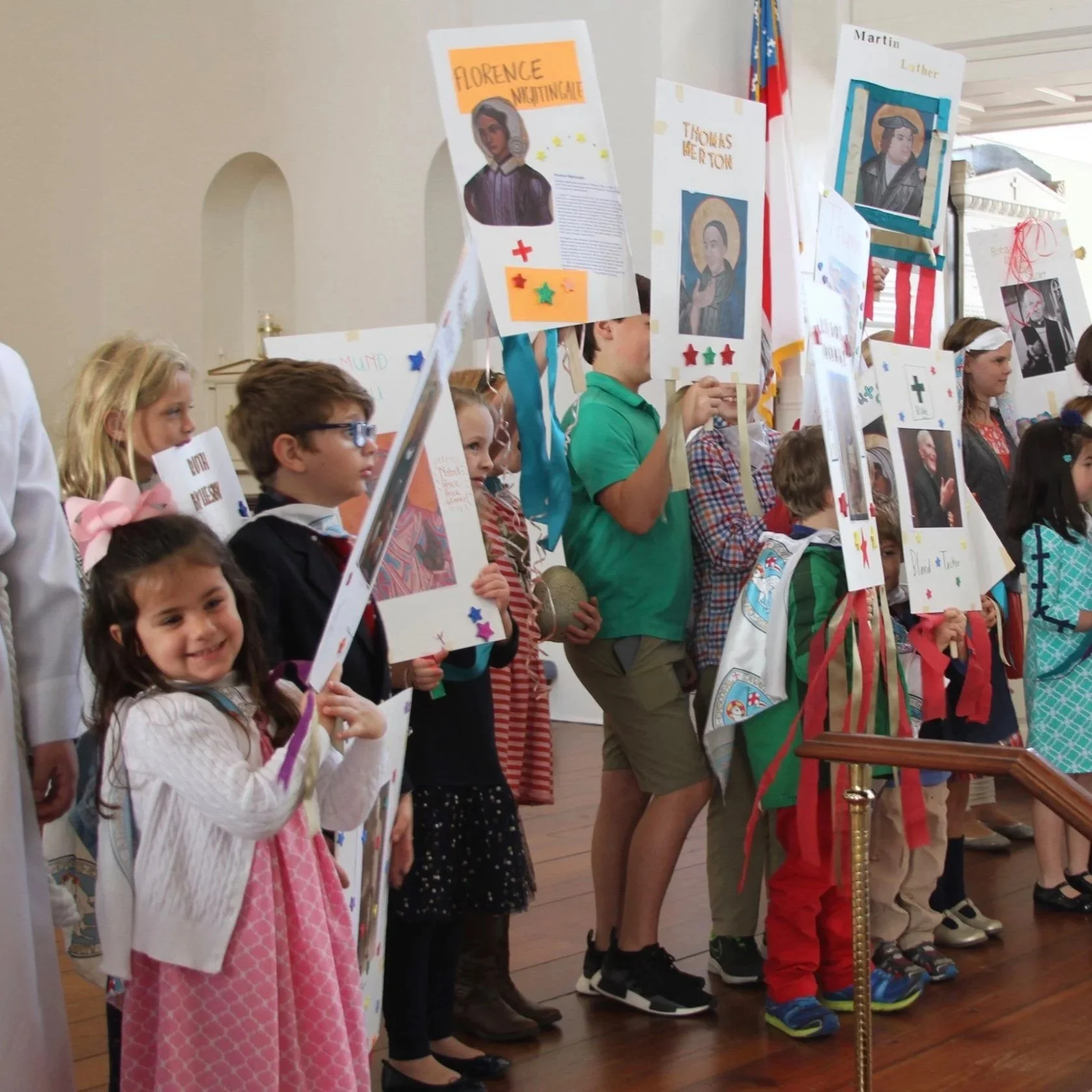
In an experimental liturgical moment, children proudly display their Saint banners during the processional hymn of All Saints’ Sunday. The experience was intergenerational, meaningful for all and doable at a busy time of year. Christ Church, Savannah, GA.
Confidence: Confidence is an absolute necessity for formation leaders, yet many shy away from the proactive actions that effective ministries require. Leaders seem paralyzed by past failures and the silent void that is congregational life on weekdays. How will folks know what we have planned? Will they be interested? Will they come and bring their families? In today’s world, we never really know who will show up at church events. A vibrant practice of curiosity, along with continued training and experience, can strengthen confidence. However, confidence ultimately stems from the continual examination and nurture of one’s own faith journey.
When I reflect on my first position in formation ministry, I realize I hesitated before accepting the job. I envisioned myself standing at the copy machine, making worksheets from premade curricula. This did not resonate with my vocational calling, but I was afraid the culture of the particular congregation required such buttoned-up, boring programs. I got curious. What were the key participants really desiring? What does published curricula really look like? What would it mean to design my own? What do I already know from my own, rich formation experience? As my curiosity led me deeper into the context, I also reflected on my own life of faith. I was raised in the Episcopal Church during what I consider a formation renaissance (1970s, 80s). I realized that as a child, adolescent and throughout my adulthood, I have felt closest to God when my creativity is sparked. I remember the joy of creating as a young person in church. So, I brought my childhood spirituality to the table and asked how the same energy and depth could be retranslated for the current context and fellow participants. Needless to say, the Spirit’s presence has been evident in my leadership experiences. Here are some other examples of leading with confidence:
Recruit volunteers boldly and creatively. More is better than less, but they must be vetted and trained and informed of calendars, curriculum, expectations.
Choose or create curriculum with confidence. There are wonderful resources available to support this endeavor. Explore, ask, and bring your authentic self to the journey. But don't forget to incorporate the perspectives of your fellow leaders and participants.
Make a plan and give it 100%. In one setting, when I realized that attendance was higher on the first Sunday of the program year, we went all out for that gathering. I spent time meeting youth and adults all over town, planning for music and cool projects. We mailed out enticing invitations, capturing the imaginations of children. The crowds came and big joy was shared. The classes dwindled, as anticipated, but the energy did not.
Leading with continuous curiosity and confidence will make a difference in everyone’s experience of Christian formation in a particular time and place. Even mediocre tennis players deserve top-notch tennis clinics! We confidently trust that God is working in our settings for ministry, and we embrace with wonder and curiosity the people we are called to serve.
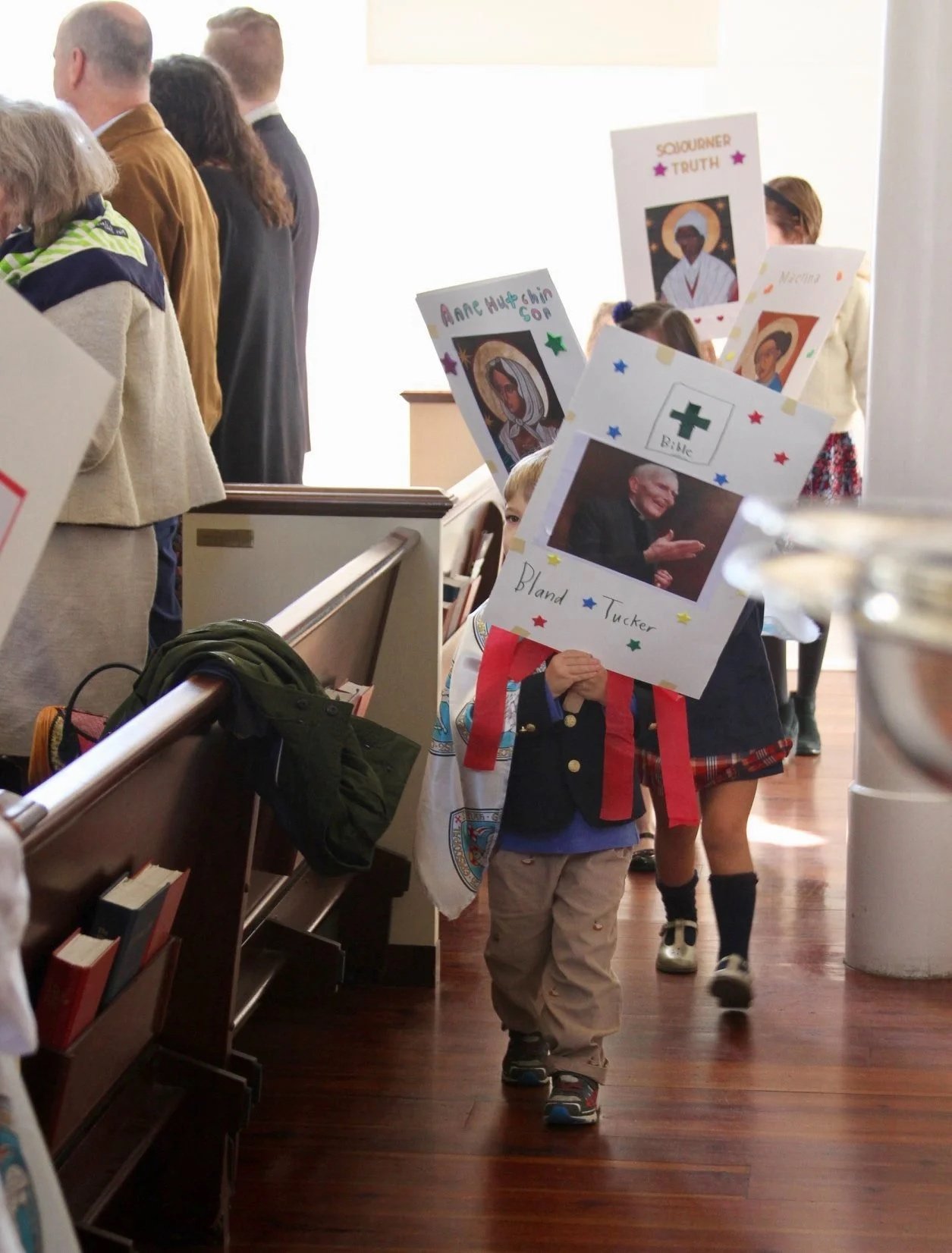
All Saints Sunday was a good time to try out an intergenerational worship experience at Christ Church Savannah, 2019